




Latest Version
July 29, 2025
Supercent Inc.
Simulation
iOS
0
Report a Problem
More About :game
The game combines hands-on wood harvesting with idle income and factory management, making it suitable for players who enjoy incremental progress, resource management, and business-building games.
What Is Idle Lumber Chopper Empire Inc?
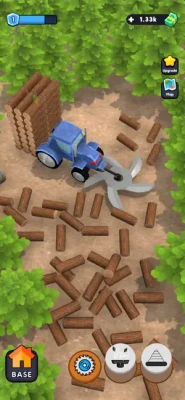
Idle Lumber Chopper Empire Inc puts players in charge of a logging company. The main objective is to turn a modest timber operation into a more efficient and profitable business by improving the way wood is collected, processed, stored, and sold.
At the beginning, progress depends heavily on manual work. As you earn more money, you can invest in better equipment, hire workers, and automate important parts of the production process. These improvements help increase output and reduce the amount of repetitive work required to keep the business running.
The game also introduces new logging areas as your operation develops. Different environments and tree varieties provide fresh opportunities to expand production and continue earning money.
Main Game Features
1. Tree Cutting and Wood Collection
Gathering timber is the foundation of the business. Players begin by chopping trees and collecting logs before moving toward more efficient harvesting methods.
2. Lumberjack Hiring
Hiring workers helps speed up logging operations. A larger and more efficient workforce can increase wood production and reduce the time spent collecting resources manually.
3. Machinery and Factory Upgrades
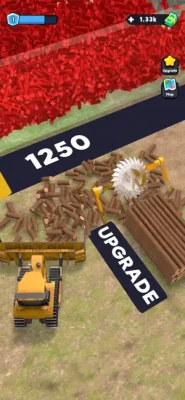
Improve your equipment and sawmills to process wood more efficiently. Upgrading production machinery helps the business handle growing quantities of timber.
4. Idle Income and Automation
The game emphasizes automated production and continued progress while you are away. As more systems become available, the business can generate income with less direct involvement.
5. Truck Deliveries and Logistics
Transporting timber is an important part of the business cycle. Managing shipments and improving delivery capacity helps turn accumulated wood into additional earnings.
6. Forest Expansion
Unlock new logging zones and discover different types of trees. New areas provide additional progression goals and opportunities to develop your operation.
7. Casual Tycoon Gameplay
The straightforward controls and incremental upgrade system make the game accessible to casual players while leaving room for strategic decisions about spending and production.
8. Offline Play
The game is advertised as playable without a Wi-Fi connection. However, some features, advertisements, rewards, or online-dependent tasks may behave differently when offline.
Gameplay Mechanics Explained
How the Logging Business Works
The central gameplay loop follows a simple pattern:
Chop trees and collect wood.
Sell or process the available timber.
Earn money from your production.
Invest in equipment and workers.
Improve production speed and delivery capacity.
Unlock new areas and repeat the process on a larger scale.
The most important decision is how to reinvest your earnings. Spending money on useful upgrades can make future harvesting and selling faster, while poorly timed purchases may leave you short of the funds needed to unlock the next improvement.
Understanding Factory Production
Your factory turns harvested resources into a more organized production operation. As production improves, pay attention to whether harvesting, processing, storage, or transportation is limiting your progress.
Upgrading one part of the operation may not deliver the best results if another part cannot keep up. A balanced business is generally more effective than investing everything in a single machine.
Understanding Progression
Progression revolves around earning money, improving efficiency, and opening new logging zones. Each stage offers another opportunity to increase productivity, but new areas may introduce different costs and progression requirements.
Before moving forward, make sure you understand which upgrades or resources will remain useful and which costs you will need to cover in the next stage.
Complete Strategy Guide for Idle Lumber Chopper Empire Inc
1. Focus on Early Income
Your first objective should be to establish a reliable source of money. Chop trees, collect logs, and sell timber regularly instead of allowing your operation to remain idle during the early stages.
Prioritize upgrades that help you earn money faster. Improving harvesting speed or increasing the amount of wood you can collect per trip can make early progression noticeably smoother.
Pro tip: When choosing between an expensive upgrade and several affordable improvements, consider which option will help you recover the investment sooner.
2. Upgrade Equipment at the Right Time
Equipment upgrades are essential for building a successful lumber business. Faster tools and more efficient machinery help reduce the time needed to produce and sell wood.
Avoid spending all your available money on a single upgrade if doing so prevents you from purchasing another improvement that would increase overall production.
A practical upgrade order is:
Improve basic harvesting efficiency.
Increase wood collection and handling capacity where possible.
Invest in production machinery.
Improve transportation and delivery.
Continue upgrading the systems responsible for your biggest bottleneck.
The exact order may change depending on the upgrades available at your current stage.
3. Hire Lumberjacks Early
Manual chopping is useful at the beginning, but relying on it for too long can slow your progress. Workers help automate the harvesting process and allow you to focus on other parts of the business.
When hiring becomes available, compare the cost of adding workers with the expected benefit to your production. Prioritize hires that noticeably improve your ability to collect wood and generate income.
Best strategy: Treat workers as long-term investments rather than purchases that must be made immediately regardless of cost.
4. Automate Your Logging Operation
Automation is one of the most important parts of an idle lumber tycoon game. It allows your business to operate more efficiently without requiring constant manual input.
As new automated systems become available, look for opportunities to reduce repetitive tasks. More efficient harvesting, processing, and delivery can help you make better use of the time you spend playing.
Check your business regularly after purchasing an automation upgrade. If production increases but earnings do not improve as expected, another part of the operation may be limiting your results.
5. Manage Your Money Carefully
Money management separates steady progress from unnecessary grinding. Every purchase should support your next meaningful goal.
Try dividing your spending into three priorities:
Production: Improvements that help you collect or process more wood.
Efficiency: Upgrades that reduce delays and repetitive work.
Expansion: Purchases that unlock additional areas or progression opportunities.
Do not spend your entire balance just because an upgrade is available. Keeping some money available can help you respond to new requirements without having to repeat the same harvesting routine.
6. Improve Wood Processing
Harvesting more trees is useful, but the business also needs to turn that wood into earnings efficiently.
Pay attention to the relationship between your harvesting capacity and your factory's processing speed. If logs accumulate faster than they can be processed, improving the factory may be more valuable than purchasing additional harvesting power.
Likewise, if your processing facilities are waiting for wood, increasing harvesting efficiency may be the better investment.
The key is to identify where production slows down and upgrade that part of the operation first.
7. Make Deliveries More Efficient
Transporting wood is another important part of the business. Better delivery capacity can help move more products and reduce interruptions in the production cycle.
Monitor the delivery process and look for upgrades that improve shipment capacity or help you earn money more consistently. Storage improvements can also be useful when the amount of wood being produced increases.
Avoid focusing exclusively on harvesting speed. A productive logging business needs its transportation system to keep pace with the rest of the operation.
8. Unlock New Forests Strategically
New logging zones offer fresh environments, different tree varieties, and additional progression opportunities.
Before unlocking another area, consider whether your current operation is developed enough to make the transition worthwhile. Build up your income and complete useful upgrades before committing to a major progression step.
Some players may find that entering a new zone changes their available resources or requires them to rebuild parts of their operation. Check the costs and requirements shown in the game before making a decision.
Pro tip: If a new area temporarily slows your progress, concentrate on its essential upgrades first instead of trying to improve every available system immediately.
9. Choose Trees and Resources Wisely
Different tree types may offer different harvesting times and timber values. When you have a choice, consider both the time required to collect the wood and the potential return.
A tree that provides more valuable timber is not automatically the best option if it takes substantially longer to harvest. Your equipment, current upgrades, and production speed all affect which choice is most efficient.
Use the information available in each area to decide whether to prioritize faster harvesting or higher-value resources.
10. Make the Most of Idle Progress
Idle gameplay allows you to return to a business that has continued progressing while you were away. This makes the game convenient for short sessions throughout the day.
Before leaving the game, make sure your available automated systems are operating efficiently. Invest in worthwhile upgrades and avoid leaving an important production bottleneck unresolved.
When you return, collect available earnings and review your next upgrade priorities before spending the money.
Keep in mind that offline progress can depend on the game's mechanics and may not operate identically to active gameplay.
11. Use Advertisements and Bonuses Selectively
Optional advertisements or in-game bonuses may offer additional rewards, depending on the current version of the game.
Consider watching a rewarded advertisement when the benefit is meaningful, such as helping you reach an important upgrade sooner. You do not need to accept every bonus opportunity if it interrupts your preferred playing style.
If an advertisement or reward fails to register, avoid repeatedly attempting the same action without checking whether the game has updated the reward total.
12. Avoid Common Beginner Mistakes
Several habits can make progression slower than necessary.
Spending everything immediately: Keep enough money available for essential purchases and upcoming requirements.
Ignoring automation: Manual work is useful early on, but automated systems become increasingly important as the business expands.
Upgrading only one department: Harvesting, processing, storage, and deliveries work together. Improving the weakest part of the operation can be more effective than maximizing one department.
Expanding without preparation: Check the requirements and potential costs of new zones before committing your resources.
Ignoring idle earnings: Make use of the game's idle mechanics, but remember to review production when you return.
Expecting every upgrade to increase profits immediately: Some purchases primarily improve capacity or unlock later progression rather than providing an instant financial return.
Advanced Tips for Faster Progress
Follow a Clear Upgrade Plan
Choose one main objective at a time. For example, you might focus on improving harvesting efficiency until the factory becomes the limiting factor, then switch to processing upgrades.
This approach prevents unnecessary spending and makes it easier to recognize which purchases are actually helping.
Compare Cost and Benefit
Before purchasing an upgrade, consider three questions:
How much does it cost?
Which part of the operation does it improve?
Will that improvement help me earn or progress faster?
Even a powerful upgrade may be a poor purchase if it does not address your current needs.
Balance Active and Idle Play
Use active sessions to collect wood, manage upgrades, and unlock progression opportunities. Use idle periods to benefit from the automated systems you have already developed.
This combination can make the game feel less repetitive while maintaining steady progress.
Review Your Business After Every Major Upgrade
Once you purchase a significant improvement, observe the result. Check whether harvesting is faster, production is smoother, or deliveries are more efficient.
If the upgrade does not solve your problem, identify the next bottleneck rather than automatically buying another upgrade in the same category.
Graphics, Atmosphere, and Overall Experience
Idle Lumber Chopper Empire Inc offers a lighthearted business-building experience centered on forests, timber, machinery, and factory development.
Its appeal comes from watching a small operation gradually become a larger enterprise. The steady cycle of collecting resources, earning money, and improving equipment provides a straightforward sense of progression without requiring the complexity of a full business management simulator.
The casual presentation suits players who prefer simple objectives and visible improvements. The main challenge is deciding where to invest your money as production grows.
Is Idle Lumber Chopper Empire Inc Worth Playing?
Idle Lumber Chopper Empire Inc is worth considering if you enjoy idle games, lumberjack simulators, factory management, and incremental tycoon experiences.
Its strongest appeal is the combination of manual woodcutting, worker management, production upgrades, transportation, and expanding logging areas. Players who enjoy gradually improving a business may find the progression satisfying.
However, the gameplay can become repetitive because harvesting, selling, and upgrading remain central to the experience. Advertisements and occasional technical issues may also affect enjoyment, depending on the version and individual experience.
Pros
Simple and accessible controls.
Satisfying incremental business progression.
Multiple upgrade and automation opportunities.
Worker hiring and factory development.
New logging zones to explore.
Idle gameplay designed for shorter sessions.
Cons
Repeated harvesting and upgrading can become monotonous.
Progress may slow when important upgrades become expensive.
Advertisements may interrupt gameplay.
Some players have reported bugs or problems with rewards.
Later progression may require patience and repeated resource collection.
Game Information
Game title: Idle Lumber Chopper Empire Inc
Developer: Supercent, Inc.
Genre: Casual, idle simulation, logging tycoon, and business management.
Platform: iPhone and iPad; availability on other platforms may vary.
Price: Free to play with in-app purchases.
Age rating: 4+ on the Apple App Store.
Supported language: English, according to the listed iOS version.
Internet connection: Advertised as playable offline, although certain online features may require connectivity.
Game modes: Primarily a single-player business and progression experience.
Main objectives: Chop trees, collect timber, hire workers, upgrade machinery, manage production, deliver wood, earn money, and expand into new logging zones.
Frequently Asked Questions
What is Idle Lumber Chopper Empire Inc?
It is a casual idle logging and tycoon game where you manage a wood-cutting business, upgrade equipment, hire lumberjacks, and expand your timber operation.
How do you earn money quickly?
Focus on productive upgrades, collect and sell wood regularly, automate harvesting when possible, and improve the part of your operation that currently limits production.
How do you unlock new areas?
Progress through the current stage, earn the required money, and meet the conditions displayed by the game before unlocking additional logging zones.
Should I upgrade machinery or hire workers first?
Choose whichever option provides the greatest immediate improvement for your current situation. Workers can increase harvesting efficiency, while machinery upgrades can improve processing and production.
Can you play Idle Lumber Chopper Empire Inc offline?
The game is advertised as playable without Wi-Fi. However, online rewards, advertisements, and certain tasks may require an internet connection.
Does the game have idle earnings?
Yes. Idle progression and automated production are central features, allowing your business to continue generating progress while you are away. The precise amount and conditions depend on the game's mechanics.
Is Idle Lumber Chopper Empire Inc free?
The game is free to download and includes optional in-app purchases. Players should check the available purchase options and current pricing in their app store.
Is Idle Lumber Chopper Empire Inc suitable for casual players?
Yes. Its simple controls, straightforward objectives, and incremental upgrades make it suitable for people who enjoy relaxed management games and short play sessions.
What is the best strategy for beginners?
Build a reliable source of income, invest in useful upgrades, hire workers when affordable, automate repetitive tasks, and avoid spending all your money on a single improvement.
Why is my progress slowing down?
Progress may slow when upgrades become more expensive or when one part of your business cannot keep up with the rest. Review harvesting, processing, and delivery efficiency before deciding where to invest next.
Final Verdict
Idle Lumber Chopper Empire Inc combines woodcutting, idle earnings, factory upgrades, worker management, and business expansion in an approachable tycoon game. Its strongest feature is the gradual transformation from a small logging operation into a larger timber enterprise.
For the best experience, focus on consistent income, automate repetitive work, balance your production systems, and invest in upgrades that solve your current bottlenecks. With a sensible spending plan, you can make steady progress without wasting resources on improvements you do not yet need.
Rate the Game
User Reviews















Popular Games



















 Android
 iOS
 Windows
 Xbox